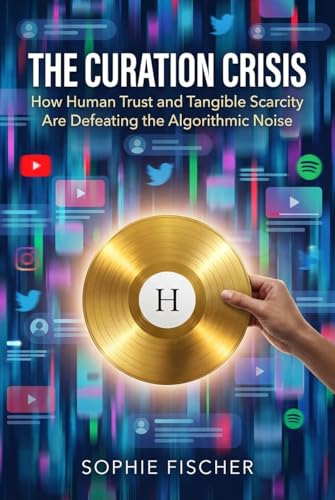
The Curation Crisis: How Human Trust and Tangible Scarcity Are Defeating the Algorithmic Noise
You sit down on your couch after a long day. You open Netflix, then Hulu, then Disney+. You scroll. You watch trailers. You check your phone. Forty-five minutes later, you turn off the TV, having watched nothing but menus. You are not alone. We were promised a utopia of infinite choice, but we were delivered a hellscape of infinite noise.
In 'The Curation Crisis,' we dismantle the biggest lie of the digital age: that the algorithm knows what you want. For the last decade, Big Tech has operated on the philosophy of 'more is more,' flooding our senses with a firehose of content designed to maximize engagement metrics rather than human satisfaction. But the tide is turning. We are witnessing the strategic retreat of the giants and the rise of the 'All-In' generation.
This book is not just an industry analysis; it is a survival guide for the attention economy. It reveals why the world’s most powerful platforms—from Spotify to Apple—are abandoning the 'long tail' in favor of manufactured 'Event' moments. It explores the 'Scarcity Paradox': as digital content becomes infinite and worthless, our time and trust become the most expensive commodities on earth.
Through deep dives into the 'Human Filter' phenomenon, we explain why a recommendation from a single trusted podcaster moves markets faster than a million-dollar ad spend. We uncover the psychology behind the 'Physical Renaissance,' explaining why Gen Z is spending fortunes on vinyl and boutique Blu-rays despite having access to the same content for free. We look at the data proving that 'Parasocial Trust' is the new gold standard of currency.
'The Curation Crisis' challenges the status quo of digital consumption. It argues that the future isn't about better algorithms; it's about the return of the gatekeeper. It is a manifesto for reclaiming your time, understanding the hidden wars being fought for your attention, and why, in 2026, the most revolutionary act you can perform is listening to a human being instead of a machine. Read this book to understand why the algorithm failed, and why the future of media is human, tangible, and scarce.