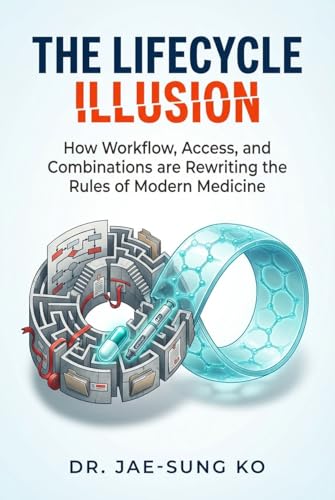
The Lifecycle Illusion: How Workflow, Access, and Combinations are Rewriting the Rules of Modern Medicine
For decades, the medical and pharmaceutical industries have operated under a comfortable, linear assumption: discover a groundbreaking molecule, prove its efficacy in a clinical trial, gain regulatory approval, and watch it transform patient lives. But if you’ve set foot in a clinic, managed a healthcare system, or tried to access a specialty medication recently, you know this narrative is broken. We’re living in an era where the rapid science of medicine has vastly outpaced the bureaucratic machinery of healthcare.
The Lifecycle Illusion shatters the myth that clinical efficacy alone drives progress. Instead, it introduces a radical idea: the true battleground for patient outcomes lies in the trenches of workflow disruption, payer coding, and relentless lifecycle management.
Consider the explosion of high-visibility weight-loss drugs like tirzepatide. By conventional metrics, these GLP-1 agonists are miracles, reshaping metabolic health. Yet their launch has thrown clinics into chaos. Providers are drowning in prior authorizations, specialized storage, and altered patient workflows. The miracle drug has become an administrative nightmare, proving that success is governed as much by clinic capacity as by mechanism of action. Similarly, established targeted therapies like lenvatinib are rewriting oncology rules—not through single approvals but through endless, aggressive lifecycle activity. The initial approval is no longer the finish line; it’s a beta test. Through continuous label extensions and complex combinations, these drugs force providers to constantly re-evaluate toxicity management and treatment algorithms.
Meanwhile, newly approved specialty agents like izervay reveal a new reality where payer coding and coverage decisions dictate adoption faster than peer-reviewed literature. This book is written for healthcare providers, pharmaceutical executives, policymakers, and investors exhausted by friction between breakthrough science and broken delivery.